
HVAC in Aurora, Illinois
Compare HVAC contractors in Aurora and get up to three free quotes, with no obligation.
What it costs here: a typical furnace-and-AC system replacement in Aurora costs $3,758 – $16,022 in 2026, with most homeowners paying around $11,374. Repairs run $148 – $1,484.
- ✅ 100% free, no obligation
- 📋 Up to 3 local quotes
- ⏱ Response within 48h
Get free HVAC quotes in Aurora, IL
Describe your project once and receive up to 3 quotes from local HVAC contractors in Aurora.
Compare freely, no obligation — always free for homeowners.
- Up to 3 quotes from vetted local HVAC contractors
- Typical response within 48 hours
- 100% free — no obligation to hire
- Your details are never sold to spammers
Request your free quotes Free
Thank you — your request has been received!
A local contractor will contact you shortly with your free, no-obligation quote.
How it works
Describe your project
One short form — project type, ZIP code, a few details.
We match local pros
Your request goes to vetted HVAC contractors serving Aurora.
Compare up to 3 quotes
Written bids, typically within 48 hours.
Hire on your terms — or don't
No obligation, and the service stays free.
Aurora’s HVAC replacement costs in 2026 are driven first by the local labor market and contractor density. Kane and DuPage County technicians and installers set wages comparable to nearby Chicago suburbs; there are many contractors, which helps competitive pricing but raises standards for licensing and insurance. Labor is the single biggest variable in total job price.
Housing stock matters: Aurora has a mix of 1960s–2000s single-family homes with existing ductwork in attics and basements, plus newer infill and some townhomes. Accessible ducts and conditioned crawlspaces shorten install time; tight, older homes or hard-to-access attics raise costs. Finally, Aurora’s hot, humid summers and cold winters increase sizing needs for both cooling and heating capacity, which raises equipment quality and install precision requirements.
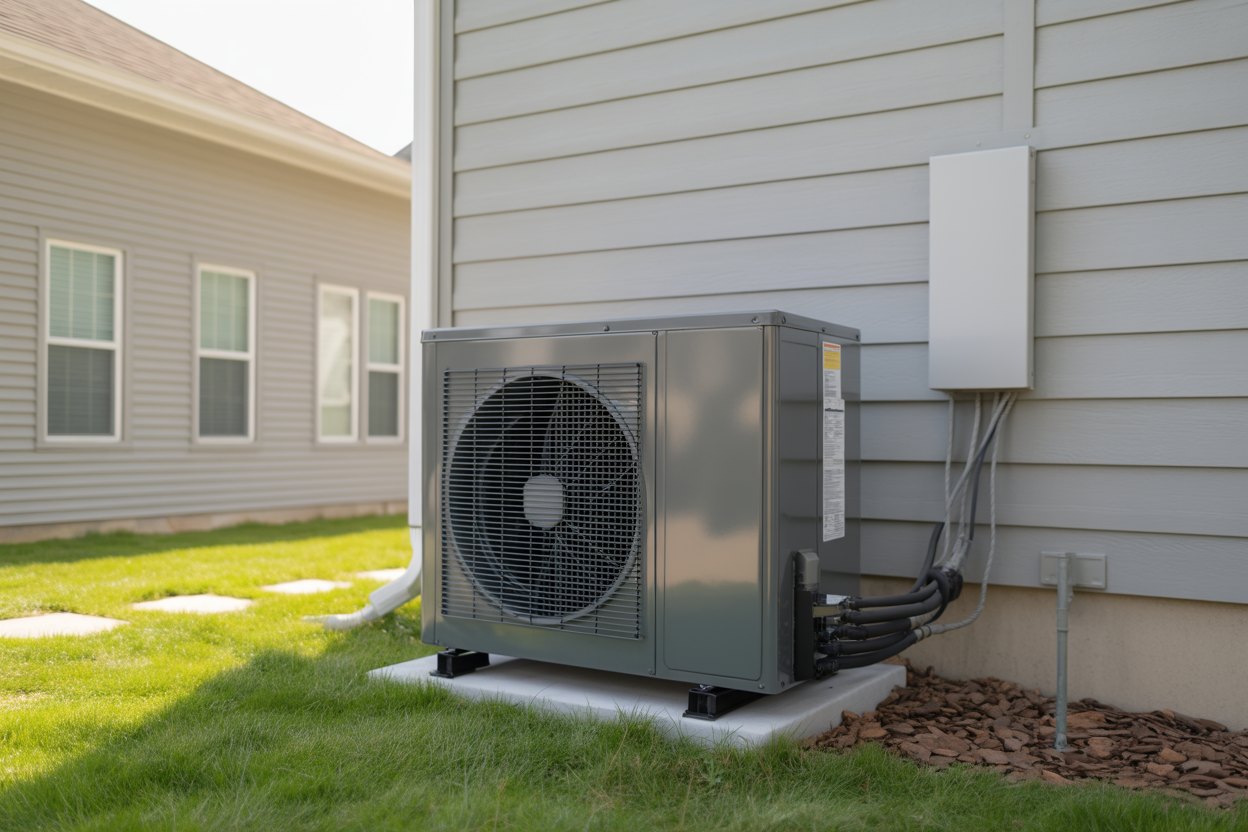
HVAC replacement cost in Aurora: low, typical, high
| Low | Typical | High | |
|---|---|---|---|
| Total project | $3,758 | $11,374 | $16,022 |
| — Labor (≈60%) | $2,255 | $6,824 | $9,613 |
| — Equipment (≈40%) | $1,503 | $4,549 | $6,409 |
Figures assume an average single-family home with usable existing ductwork and a standard-efficiency system. Ductwork changes, high-efficiency equipment and difficult attic access land above these ranges.
Cost by system type in Aurora
| System | Installed total | Typical lifespan |
|---|---|---|
| Central AC only | $3,857 – $7,912 | 12–17 yrs |
| Gas furnace only | $2,769 – $9,890 | 15–20 yrs |
| Furnace + AC (full system) | $4,945 – $16,022 | 15–20 yrs |
| Air-source heat pump | $7,912 – $14,835 | 12–15 yrs |
| Ductless mini-split (per zone) | $3,956 – $7,912 | 15–20 yrs |
Cost by home size
| Home size | Approx. cooling capacity | Full system, installed |
|---|---|---|
| Small home (~1,200 sq ft) | 2 tons | $3,363 – $10,681 |
| Average home (~1,800 sq ft) | 3.5 tons | $5,885 – $18,692 |
| Large home (~2,600 sq ft) | 4.5 tons | $7,566 – $24,033 |
Capacity shown is an estimate from floor area only. Correct sizing requires a Manual J load calculation — insist on one before signing any quote.
Why Aurora prices run close to the national average
Aurora carries a local cost index of about 0.99 — HVAC labor, permits and equipment here price roughly in line with the US average.
Season matters even more than metro: the first heat wave and the first hard freeze create backlogs across Illinois, and emergency pricing follows. Replacing in the shoulder seasons — spring or fall — regularly saves 10–20% on the same equipment.
HVAC in Aurora: systems, climate and permits
Best system types for Aurora’s climate
Aurora’s climate favors heat pumps for most homes because modern cold-climate air-source heat pumps maintain efficiency through the subfreezing shoulder seasons and into winter. Where natural gas is cheap and infrastructure exists, a high-efficiency furnace paired with a central AC still makes sense for very cold or oversized homes. Mini-splits are appropriate for additions, finished basements, or houses without ductwork. For central systems, choose SEER2 ratings at or above minimums; in practice, mid- to high-SEER2 (15–20+) units give noticeable summer savings versus older units.
Energy, utility and rebate considerations
Illinois offers utility rebate programs through common suppliers and efficiency programs—check with Nicor, ComEd, or your municipal electric supplier for HVAC incentives and prescriptive rebates. Federal tax credits under Section 25C (updated credits for energy-efficient equipment) can offset part of equipment cost; verify eligibility and documentation. Also factor in seasonal peak-demand pricing or time-of-use electricity plans if you electrify; a high-efficiency heat pump plus a smart thermostat can lower peak charges. Aurora’s summer humidity means dehumidification performance matters—look for equipment with good latent capacity. Dust from fall leaf season and road salt in winter suggest reliable filtration and regular coil maintenance.
Permits, Manual J, code and HOA notes
Most full replacements or new refrigerant lines in Aurora require a local permit and inspection; contractors typically pull permits for HVAC work. Expect a Manual J load calculation to size equipment correctly—this is standard practice and sometimes required for permits. Building codes in Illinois follow the state and adopted ICC model codes; line-set length, combustion venting and electrical connections must meet local code. If you belong to an HOA, check rules for exterior condenser placement, noise limits, and aesthetic screening before scheduling installers. Always verify permit and code specifics with the City of Aurora or Kane/DuPage County building departments.
How to hire an HVAC contractor in Aurora (and what to avoid)
- Get 3 written bids. Line-item quotes make comparison honest — equipment model numbers, labor, permit, removal and any ductwork.
- Verify license & insurance. Ask for the Illinois contractor registration/license number and a current certificate of insurance — then check them with the issuing authority.
- Check the paper trail. Manufacturer certifications (Carrier, Trane, Lennox dealer programs, NATE-certified technicians) and a local physical address beat a magnetic truck sign.
- Never pay in full upfront. A deposit of 10–30% is normal; final payment on completed, inspected work.
- Get the warranty in writing. Separate manufacturer (materials) and workmanship coverage — and who honors it if the company changes hands.
🚩 Red flags
- A replacement quote with no load calculation — sizing "by square footage" or "same as the old one" is how homes end up with oversized systems that short-cycle.
- A maintenance visit that turns into an urgent replacement recommendation, with no measurements shown and a discount that expires today.
- Refrigerant top-ups sold repeatedly without ever finding the leak.
- Quotes far below every other bid — the gap usually reappears as change orders or unpermitted work.
HVAC repair costs in Aurora
Not every problem needs a new system. Typical repair pricing in Aurora:
- Common electrical parts (capacitor, contactor, relay): $148 – $445
- Refrigerant leak diagnosis and repair: $495 – $1,484
- Thermostat Installation Cost: $67 – $495
- HVAC Tune-Up Cost: $69 – $198
Rule of thumb: when repairs approach 25–30% of replacement cost on aging equipment, replacement is usually the better long-term spend. See the full repair cost guide.
How we calculate Aurora costs
We start from documented national baselines, size the job to a typical home for this metro, then apply Aurora's local cost index (≈0.99). Full details on our methodology page. These are planning ranges, not quotes — a real bid for your specific system beats any model. Want that real number? Get free local quotes.
Frequently asked questions
When is the best season to replace my furnace or AC in Aurora?
Late spring (April–May) and early fall (September) are best. Contractors are less booked, temperatures are moderate for testing, and you avoid emergency summer heat and winter cold. Scheduling then typically shortens lead time and can reduce labor premium compared with peak-season installs.
Is replacing HVAC in Aurora more or less expensive than the U.S. average?
Aurora’s local cost index is about 0.99, so costs tend to be slightly below the U.S. average. Full system replacement ranges you should expect remain within the national anchor: $3,758–$16,022 with a typical job near $11,374. Local labor and housing access drive small deviations.
Should I choose a heat pump or a gas furnace plus AC in Illinois’ climate?
For most Aurora homes, a modern cold-climate heat pump provides efficient heating and cooling and simplifies service. If you have abundant, low-cost natural gas, a high-efficiency furnace plus central AC can be competitive for very cold-heavy loads or homes with oversized ducts. Use a Manual J load to decide.
How many contractor quotes should I get in Aurora before replacing a system?
Get at least three written quotes from licensed HVAC contractors. Ensure each includes Manual J sizing, equipment make/model and SEER2/HSPF specs, labor scope, permit handling, and warranty details. Comparing apples-to-apples estimates reduces surprises and helps spot unusually low bids.
When is it better to repair rather than replace locally?
If repair costs fall toward the upper repair-visit range ($148–$1,484) and the system is over 10–15 years old, replacement often makes more sense—especially if efficiency gains or rebates apply. For newer systems with isolated failures, repair is usually the cost-effective choice.
How Aurora compares to nearby metros
| Metro | Typical replacement | vs Aurora |
|---|---|---|
| Chicago, IL | $11,799 | +4% |
| Naperville, IL | $11,799 | +4% |
| Joliet, IL | $11,374 | 0% |
| Rockford, IL | $10,362 | -9% |
Ready for a real number for your Aurora system?
Compare up to 3 free quotes from local HVAC contractors — no obligation, no spam.
Get my free quotes