
HVAC in Corona, California
Compare HVAC contractors in Corona and get up to three free quotes, with no obligation.
What it costs here: a typical furnace-and-AC system replacement in Corona costs $4,279 – $18,241 in 2026, with most homeowners paying around $12,949. Repairs run $169 – $1,689.
- ✅ 100% free, no obligation
- 📋 Up to 3 local quotes
- ⏱ Response within 48h
Get free HVAC quotes in Corona, CA
Describe your project once and receive up to 3 quotes from local HVAC contractors in Corona.
Compare freely, no obligation — always free for homeowners.
- Up to 3 quotes from vetted local HVAC contractors
- Typical response within 48 hours
- 100% free — no obligation to hire
- Your details are never sold to spammers
Request your free quotes Free
Thank you — your request has been received!
A local contractor will contact you shortly with your free, no-obligation quote.
How it works
Describe your project
One short form — project type, ZIP code, a few details.
We match local pros
Your request goes to vetted HVAC contractors serving Corona.
Compare up to 3 quotes
Written bids, typically within 48 hours.
Hire on your terms — or don't
No obligation, and the service stays free.
Corona sits in Southern California’s inland corridor where summers are hot and winters are mild. Replacement price drivers in 2026 include a tight local labor market and high contractor density along the I-15/CA‑91 corridors; busy crews push labor rates above the national average. Corona’s housing stock is a mix of 1980s–2000s tract homes with existing duct systems in attics or crawlspaces, which often reduces demo and ductwork cost but raises attic-access labor.
Cooling load is the dominant factor: higher-capacity compressors, larger condensers and higher SEER2 equipment are common. Equipment meeting California efficiency regulations and local permitting costs also add to upfront price, which helps explain why full system replacement here trends above the national baseline.
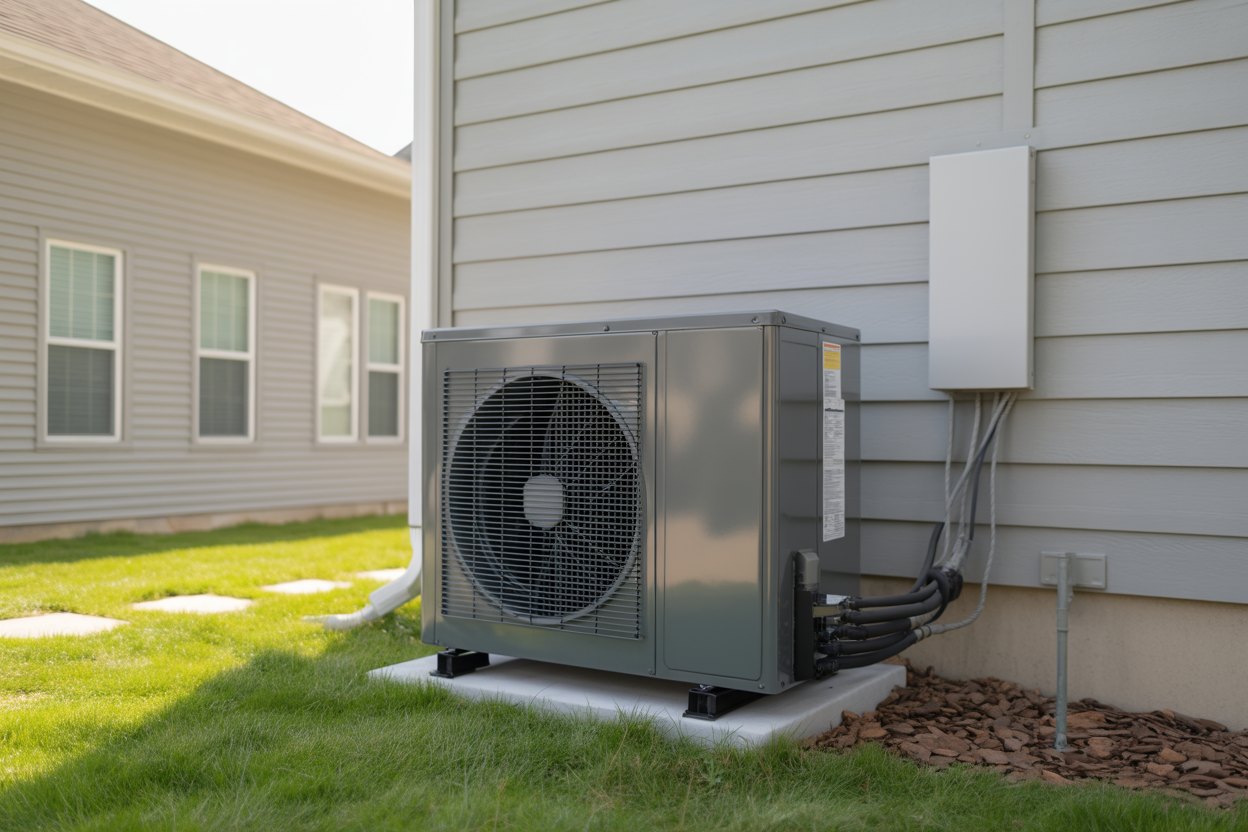
HVAC replacement cost in Corona: low, typical, high
| Low | Typical | High | |
|---|---|---|---|
| Total project | $4,279 | $12,949 | $18,241 |
| — Labor (≈60%) | $2,567 | $7,769 | $10,945 |
| — Equipment (≈40%) | $1,712 | $5,180 | $7,296 |
Figures assume an average single-family home with usable existing ductwork and a standard-efficiency system. Ductwork changes, high-efficiency equipment and difficult attic access land above these ranges.
Cost by system type in Corona
| System | Installed total | Typical lifespan |
|---|---|---|
| Central AC only | $4,391 – $9,008 | 12–17 yrs |
| Gas furnace only | $3,153 – $11,260 | 15–20 yrs |
| Furnace + AC (full system) | $5,630 – $18,241 | 15–20 yrs |
| Air-source heat pump | $9,008 – $16,890 | 12–15 yrs |
| Ductless mini-split (per zone) | $4,504 – $9,008 | 15–20 yrs |
Cost by home size
| Home size | Approx. cooling capacity | Full system, installed |
|---|---|---|
| Small home (~1,200 sq ft) | 2 tons | $3,828 – $12,161 |
| Average home (~1,800 sq ft) | 3.5 tons | $6,700 – $21,281 |
| Large home (~2,600 sq ft) | 4.5 tons | $8,614 – $27,362 |
Capacity shown is an estimate from floor area only. Correct sizing requires a Manual J load calculation — insist on one before signing any quote.
Why Corona prices run above the national average
Corona carries a local cost index of about 1.13 — HVAC labor, permits and equipment here price roughly 13% above the US average, driven mostly by labor rates. California's mild coastal climates need modest cooling, while inland valleys run brutal summers — and the state's efficiency standards mean replacement equipment must meet stricter minimums than the federal baseline.
Season matters even more than metro: the first heat wave and the first hard freeze create backlogs across California, and emergency pricing follows. Replacing in the shoulder seasons — spring or fall — regularly saves 10–20% on the same equipment.
HVAC in Corona: systems, climate and permits
System types that make sense in Corona
For Corona’s hot summers and mild winters, high-efficiency air-source heat pumps and conventional furnace+AC remain viable. Modern cold‑climate heat pumps handle Corona easily and can replace gas furnaces in many homes, reducing winter combustion. Where existing ductwork is sound, a ducted heat pump or split system is cost‑effective. Mini‑splits (ductless) are popular for room additions, garage conversions, or in older homes with poor ducts because they avoid duct repairs. CA now uses SEER2/TIERED efficiency ratings; choosing a SEER2 tier higher than the federal baseline reduces operating costs in Corona’s long cooling season, but raises initial equipment cost.
Energy, utility and rebate angle
California utilities and state programs offer rebates and incentives for high-efficiency heat pumps and whole‑home electrification; many rebates favor higher SEER2/HSPF2 tiers and low‑GWP refrigerants. Homeowners can also consider the federal 25C tax credit for qualifying heat pump installations when applicable. Corona’s utilities may use time‑of‑use and peak‑demand pricing—meaning higher bills in late‑afternoon/early‑evening heat waves—so higher‑efficiency systems and smart thermostats yield larger savings. Inland valley homes should also account for dust intrusion and occasional salt‑air effects from coastal transport; robust filtration and corrosion‑rated outdoor coils extend system life.
Permits, Manual J and HOA notes
California jurisdictions require local mechanical permits for major HVAC replacements; the City of Corona or Riverside County will expect equipment specs and ductwork details. A Manual J load calculation is standard practice to size equipment correctly—oversizing is common and costly in Corona’s hot climate. Contractors should provide load reports, permit pull confirmations and detailed scope. Many Corona neighborhoods are under HOAs with rules on exterior equipment placement and condenser screening, so verify HOA approvals before scheduling installation.
How to hire an HVAC contractor in Corona (and what to avoid)
- Get 3 written bids. Line-item quotes make comparison honest — equipment model numbers, labor, permit, removal and any ductwork.
- Verify license & insurance. Ask for the California contractor registration/license number and a current certificate of insurance — then check them with the issuing authority.
- Check the paper trail. Manufacturer certifications (Carrier, Trane, Lennox dealer programs, NATE-certified technicians) and a local physical address beat a magnetic truck sign.
- Never pay in full upfront. A deposit of 10–30% is normal; final payment on completed, inspected work.
- Get the warranty in writing. Separate manufacturer (materials) and workmanship coverage — and who honors it if the company changes hands.
🚩 Red flags
- A replacement quote with no load calculation — sizing "by square footage" or "same as the old one" is how homes end up with oversized systems that short-cycle.
- A maintenance visit that turns into an urgent replacement recommendation, with no measurements shown and a discount that expires today.
- Refrigerant top-ups sold repeatedly without ever finding the leak.
- Quotes far below every other bid — the gap usually reappears as change orders or unpermitted work.
HVAC repair costs in Corona
Not every problem needs a new system. Typical repair pricing in Corona:
- Common electrical parts (capacitor, contactor, relay): $169 – $507
- Refrigerant leak diagnosis and repair: $563 – $1,689
- Thermostat Installation Cost: $77 – $563
- HVAC Tune-Up Cost: $79 – $225
Rule of thumb: when repairs approach 25–30% of replacement cost on aging equipment, replacement is usually the better long-term spend. See the full repair cost guide.
How we calculate Corona costs
We start from documented national baselines, size the job to a typical home for this metro, then apply Corona's local cost index (≈1.13). Full details on our methodology page. These are planning ranges, not quotes — a real bid for your specific system beats any model. Want that real number? Get free local quotes.
Frequently asked questions
When is the best season to replace an HVAC system in Corona?
Late spring or early fall is best. Contractors are less booked than peak summer, and you avoid the hottest weeks when replacements are in high demand. Scheduling outside peak season often reduces wait time and can lower labor markups.
Is replacing HVAC in Corona more expensive than the U.S. average and why?
Yes—Corona trends higher than the U.S. average due to a local cost index of 1.13, a tight HVAC labor market, higher permitting and California efficiency requirements. Expect full system replacement to fall inside the local anchor range ($4,279–$18,241, typical $12,949).
Should I choose a heat pump or a gas furnace plus AC in Corona?
Heat pumps suit Corona’s mild winters and long cooling season and can cut operating costs when paired with high SEER2/HSPF2 ratings. If you have existing gas infrastructure and need high winter heat output, a hybrid approach is possible. Consider rebates and the federal 25C credit for heat pumps when deciding.
How many contractor quotes should I get in Corona?
Get at least three written quotes. Compare Manual J sizing, equipment SEER2/HSPF2 ratings, warranties, permit handling and scope for duct repairs. Local contractor density means you should check references and permit pull records before hiring.
When is it better to repair rather than replace in Corona?
For minor issues, repairs often make sense; HVAC repair visits in the area range from $169–$1,689. Replace when the system is older, inefficient by SEER2 standards, needs frequent costly repairs, or when replacement qualifies you for significant rebates that shorten payback.
How Corona compares to nearby metros
| Metro | Typical replacement | vs Corona |
|---|---|---|
| Bakersfield, CA | $12,880 | -1% |
| Fresno, CA | $12,995 | 0% |
| Stockton, CA | $13,225 | +2% |
| Modesto, CA | $12,995 | 0% |
Ready for a real number for your Corona system?
Compare up to 3 free quotes from local HVAC contractors — no obligation, no spam.
Get my free quotes