
HVAC in Phoenix, Arizona
Compare HVAC contractors in Phoenix and get up to three free quotes, with no obligation.
What it costs here: a typical furnace-and-AC system replacement in Phoenix costs $4,009 – $17,091 in 2026, with most homeowners paying around $12,133. Repairs run $158 – $1,583.
- ✅ 100% free, no obligation
- 📋 Up to 3 local quotes
- ⏱ Response within 48h
Get free HVAC quotes in Phoenix, AZ
Describe your project once and receive up to 3 quotes from local HVAC contractors in Phoenix.
Compare freely, no obligation — always free for homeowners.
- Up to 3 quotes from vetted local HVAC contractors
- Typical response within 48 hours
- 100% free — no obligation to hire
- Your details are never sold to spammers
Request your free quotes Free
Thank you — your request has been received!
A local contractor will contact you shortly with your free, no-obligation quote.
How it works
Describe your project
One short form — project type, ZIP code, a few details.
We match local pros
Your request goes to vetted HVAC contractors serving Phoenix.
Compare up to 3 quotes
Written bids, typically within 48 hours.
Hire on your terms — or don't
No obligation, and the service stays free.
Phoenix replacement prices in 2026 are driven by three local factors: a tight construction labor market and high contractor density that keep install wait times and labor premiums above rural averages; dominant housing stock of post‑1960 tract homes and newer subdivisions where ductwork often runs in uninsulated attics or in conditioned plenums; and an extreme cooling load — multi‑month high ambient temperatures that prioritize outdoor condenser capacity, shaded condenser placement and refrigerant charge accuracy over winter heating performance.
Those realities push homeowners toward higher‑capacity condensers, better duct sealing, and installers experienced with high‑ambient SEER2 tuning — all increasing first‑costs compared with moderate‑climate replacements.
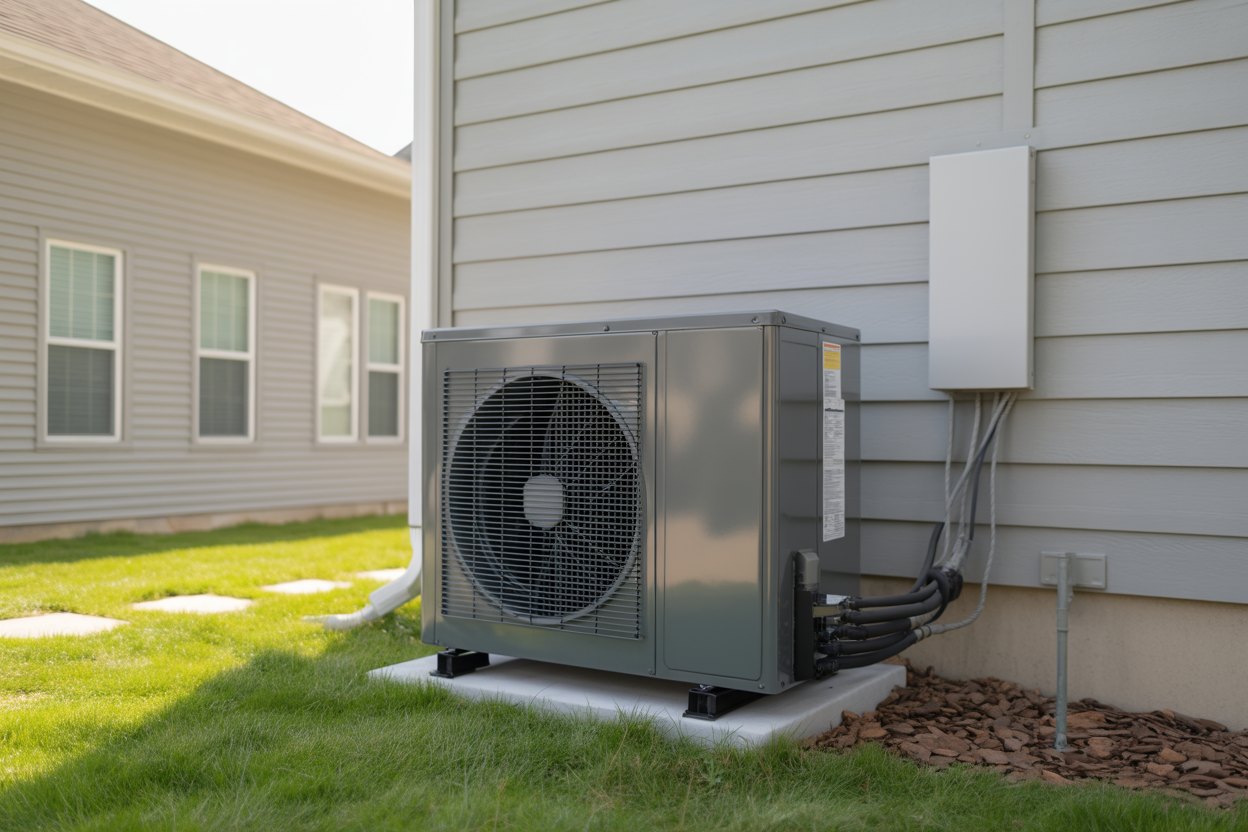
HVAC replacement cost in Phoenix: low, typical, high
| Low | Typical | High | |
|---|---|---|---|
| Total project | $4,009 | $12,133 | $17,091 |
| — Labor (≈60%) | $2,405 | $7,280 | $10,255 |
| — Equipment (≈40%) | $1,604 | $4,853 | $6,836 |
Figures assume an average single-family home with usable existing ductwork and a standard-efficiency system. Ductwork changes, high-efficiency equipment and difficult attic access land above these ranges.
Cost by system type in Phoenix
| System | Installed total | Typical lifespan |
|---|---|---|
| Central AC only | $4,115 – $8,440 | 12–17 yrs |
| Gas furnace only | $2,954 – $10,550 | 15–20 yrs |
| Furnace + AC (full system) | $5,275 – $17,091 | 15–20 yrs |
| Air-source heat pump | $8,440 – $15,825 | 12–15 yrs |
| Ductless mini-split (per zone) | $4,220 – $8,440 | 15–20 yrs |
Cost by home size
| Home size | Approx. cooling capacity | Full system, installed |
|---|---|---|
| Small home (~1,200 sq ft) | 2 tons | $3,587 – $11,394 |
| Average home (~1,800 sq ft) | 3.5 tons | $6,277 – $19,940 |
| Large home (~2,600 sq ft) | 4.5 tons | $8,071 – $25,637 |
Capacity shown is an estimate from floor area only. Correct sizing requires a Manual J load calculation — insist on one before signing any quote.
Why Phoenix prices run above the national average
Phoenix carries a local cost index of about 1.05 — HVAC labor, permits and equipment here price roughly 5% above the US average, driven mostly by labor rates. Arizona's extreme summer heat pushes cooling equipment to its design limits for months, so capacity at high ambient temperature and shaded condenser placement matter far more than heating performance.
Season matters even more than metro: the first heat wave and the first hard freeze create backlogs across Arizona, and emergency pricing follows. Replacing in the shoulder seasons — spring or fall — regularly saves 10–20% on the same equipment.
HVAC in Phoenix: systems, climate and permits
Systems that make sense in Phoenix
In Phoenix the priority is cooling capacity at high ambient temperatures. High‑efficiency split heat pumps sized and rated for high‑ambient performance are now common and often outperform older gas furnace + AC combos on seasonal cooling cost and efficiency. Ducted high‑SEER2 heat pumps or two‑stage/variable‑speed AC with proper high‑temp ratings are ideal where ductwork remains. Mini‑splits (ductless) make sense for room additions, hot rooms, or homes with poor attic duct access — they avoid attic duct losses and provide zoning. When a gas furnace remains only for rare winter use, compare lifecycle costs: many Phoenix homes save more with cooled‑focused heat pump systems. Choose equipment with SEER2 tiers suited to Phoenix summers (higher SEER2 gives smaller operating bills but requires larger upfront investment and careful high‑ambient sizing).
Energy, utility and rebate considerations
Arizona utilities and the federal 25C tax credit affect payback. Many local utilities (verify with your provider) offer rebates for high‑SEER2 systems and heat pumps, and some have peak‑demand summer pricing or time‑of‑use rates that make efficiency and thermal storage valuable. The federal 25C credit for qualifying heat pumps can reduce net cost; confirm eligibility and paperwork. Also factor in dust and low humidity: high outdoor dust and occasional monsoon salt‑laden air mean better filtration, more frequent coil cleaning, and UV/indoor‑air accessories may be worthwhile. Shaded condenser placement and elevated pads reduce run time and extend life in Phoenix sun, so include site work in estimates.
Permits, Manual J, code and HOA notes
Arizona jurisdictions require permits for most full system replacements; many cities and Maricopa County expect a compliant Manual J load calculation and a Manual D duct design when ducts are modified. City building departments enforce minimum SEER2 and refrigerant safety codes; local amendments may apply, so verify with your city or county. HOAs commonly restrict condenser placement and pad location — get HOA approval early for shading, screening or pad relocation. Always request a signed Manual J from contractors and confirm permit pulls before work begins.
How to hire an HVAC contractor in Phoenix (and what to avoid)
- Get 3 written bids. Line-item quotes make comparison honest — equipment model numbers, labor, permit, removal and any ductwork.
- Verify license & insurance. Ask for the Arizona contractor registration/license number and a current certificate of insurance — then check them with the issuing authority.
- Check the paper trail. Manufacturer certifications (Carrier, Trane, Lennox dealer programs, NATE-certified technicians) and a local physical address beat a magnetic truck sign.
- Never pay in full upfront. A deposit of 10–30% is normal; final payment on completed, inspected work.
- Get the warranty in writing. Separate manufacturer (materials) and workmanship coverage — and who honors it if the company changes hands.
🚩 Red flags
- A replacement quote with no load calculation — sizing "by square footage" or "same as the old one" is how homes end up with oversized systems that short-cycle.
- A maintenance visit that turns into an urgent replacement recommendation, with no measurements shown and a discount that expires today.
- Refrigerant top-ups sold repeatedly without ever finding the leak.
- Quotes far below every other bid — the gap usually reappears as change orders or unpermitted work.
HVAC repair costs in Phoenix
Not every problem needs a new system. Typical repair pricing in Phoenix:
- Common electrical parts (capacitor, contactor, relay): $158 – $475
- Refrigerant leak diagnosis and repair: $528 – $1,583
- Thermostat Installation Cost: $72 – $528
- HVAC Tune-Up Cost: $74 – $211
Rule of thumb: when repairs approach 25–30% of replacement cost on aging equipment, replacement is usually the better long-term spend. See the full repair cost guide.
How we calculate Phoenix costs
We start from documented national baselines, size the job to a typical home for this metro, then apply Phoenix's local cost index (≈1.06). Full details on our methodology page. These are planning ranges, not quotes — a real bid for your specific system beats any model. Want that real number? Get free local quotes.
Frequently asked questions
When is the best season to replace an AC or heat pump in Phoenix?
Late winter to early spring is best in Phoenix: scheduling before the long cooling season avoids peak contractor demand and long lead times. Late fall can also work but you may be without full cooling if unexpected delays occur. Expect higher demand and potentially higher labor premiums in summer.
Are HVAC replacements more expensive in Phoenix than the U.S. average?
Slightly more expensive: use the local cost index of 1.05, meaning roughly 5% above national average. Local factors — high‑ambient equipment, shaded condenser work, attic duct sealing and a competitive contractor market — push costs up. Full system replacement ranges you should plan for: $4,009–$17,091, typical $12,132.
Should I choose a heat pump or a gas furnace plus AC in Phoenix?
Most Phoenix homeowners benefit from a modern, high‑ambient rated heat pump or heat pump + supplemental heat because cooling dominates energy use. Heat pumps offer better seasonal cooling efficiency and can qualify for federal 25C credits and local rebates. Retain gas only if you already have cheap natural gas and prefer combustion heat for rare cold snaps.
How many contractor quotes should I get in Phoenix?
Get at least three written bids from licensed local contractors. Compare equipment make/model, SEER2 rating, high‑ambient performance, Manual J results, ductwork scope and permit handling. Ask for references on installs in similar Phoenix neighborhoods and for details on condenser placement/shading plans.
When is repair a better option than replacement in Phoenix?
Repair can be better for single‑component failures on newer systems or when expected remaining life is >5 years. If the unit is old, needs frequent visits (typical repair visit costs $158–$1,582), has low SEER2, or suffers duct leakage and oversized/undersized capacity, replacement often yields lower operating costs and better reliability given Phoenix cooling demands.
How Phoenix compares to nearby metros
| Metro | Typical replacement | vs Phoenix |
|---|---|---|
| Tucson, AZ | $11,155 | -8% |
| Mesa, AZ | $11,385 | -6% |
| Gilbert, AZ | $11,627 | -4% |
| Chandler, AZ | $12,133 | 0% |
Ready for a real number for your Phoenix system?
Compare up to 3 free quotes from local HVAC contractors — no obligation, no spam.
Get my free quotes