
HVAC in Pittsburgh, Pennsylvania
Compare HVAC contractors in Pittsburgh and get up to three free quotes, with no obligation.
What it costs here: a typical furnace-and-AC system replacement in Pittsburgh costs $3,587 – $15,293 in 2026, with most homeowners paying around $10,856. Repairs run $142 – $1,416.
- ✅ 100% free, no obligation
- 📋 Up to 3 local quotes
- ⏱ Response within 48h
Get free HVAC quotes in Pittsburgh, PA
Describe your project once and receive up to 3 quotes from local HVAC contractors in Pittsburgh.
Compare freely, no obligation — always free for homeowners.
- Up to 3 quotes from vetted local HVAC contractors
- Typical response within 48 hours
- 100% free — no obligation to hire
- Your details are never sold to spammers
Request your free quotes Free
Thank you — your request has been received!
A local contractor will contact you shortly with your free, no-obligation quote.
How it works
Describe your project
One short form — project type, ZIP code, a few details.
We match local pros
Your request goes to vetted HVAC contractors serving Pittsburgh.
Compare up to 3 quotes
Written bids, typically within 48 hours.
Hire on your terms — or don't
No obligation, and the service stays free.
Pittsburgh replacement costs in 2026 are driven first by labor and contractor density: western Pennsylvania pays slightly below national labor rates (local index ~0.94), but many contractors are small, which reduces markup variance and creates busy spring/fall booking windows. Housing stock—large share of pre-1950 rowhouses and brick twins with existing forced-air ducts—makes duct reuse common, lowering full-system replacement costs versus full-duct retrofits.
Climate and loads matter: Pittsburgh has cold winters and humid summers, so systems sized for significant winter heat load and dehumidification capacity increase equipment and installation time. Attic and crawlspace access in older homes also raises labor hours when crews must retrofit ducts or insulate. These three factors—labor/contractor market, older housing with existing ducts, and mixed heating/cooling loads—explain local price dispersion.
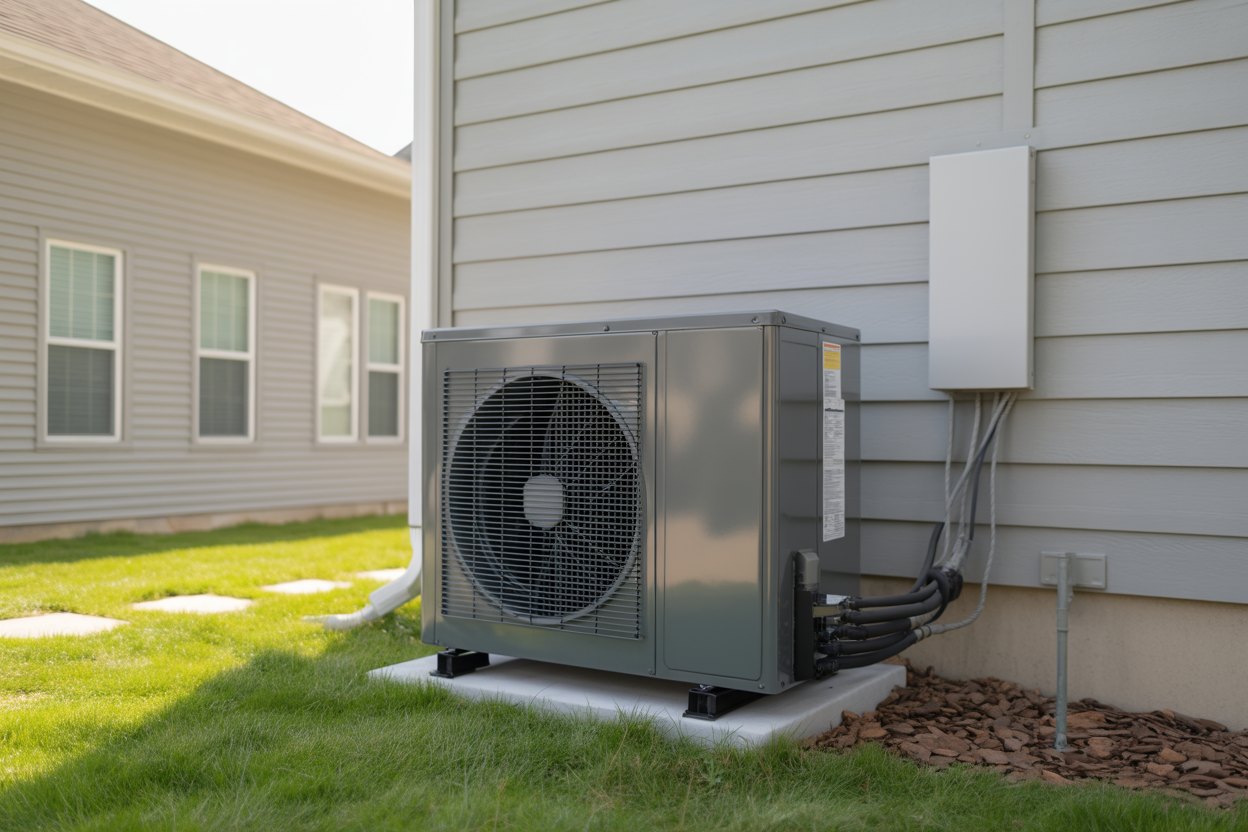
HVAC replacement cost in Pittsburgh: low, typical, high
| Low | Typical | High | |
|---|---|---|---|
| Total project | $3,587 | $10,856 | $15,293 |
| — Labor (≈60%) | $2,152 | $6,514 | $9,176 |
| — Equipment (≈40%) | $1,435 | $4,342 | $6,117 |
Figures assume an average single-family home with usable existing ductwork and a standard-efficiency system. Ductwork changes, high-efficiency equipment and difficult attic access land above these ranges.
Cost by system type in Pittsburgh
| System | Installed total | Typical lifespan |
|---|---|---|
| Central AC only | $3,682 – $7,552 | 12–17 yrs |
| Gas furnace only | $2,643 – $9,440 | 15–20 yrs |
| Furnace + AC (full system) | $4,720 – $15,293 | 15–20 yrs |
| Air-source heat pump | $7,552 – $14,160 | 12–15 yrs |
| Ductless mini-split (per zone) | $3,776 – $7,552 | 15–20 yrs |
Cost by home size
| Home size | Approx. cooling capacity | Full system, installed |
|---|---|---|
| Small home (~1,200 sq ft) | 2 tons | $3,210 – $10,195 |
| Average home (~1,800 sq ft) | 3.5 tons | $5,617 – $17,842 |
| Large home (~2,600 sq ft) | 4.5 tons | $7,222 – $22,939 |
Capacity shown is an estimate from floor area only. Correct sizing requires a Manual J load calculation — insist on one before signing any quote.
Why Pittsburgh prices run below the national average
Pittsburgh carries a local cost index of about 0.94 — HVAC labor, permits and equipment here price roughly 6% below the US average, thanks to competitive labor markets.
Season matters even more than metro: the first heat wave and the first hard freeze create backlogs across Pennsylvania, and emergency pricing follows. Replacing in the shoulder seasons — spring or fall — regularly saves 10–20% on the same equipment.
HVAC in Pittsburgh: systems, climate and permits
Which system types make sense in Pittsburgh
For most Pittsburgh homes, two sensible paths: a high-efficiency gas furnace paired with a central AC or an electric cold-climate heat pump. Gas furnaces still dominate where natural gas is available and homeowners prioritize winter performance; pairing with a high-SEER2 condensing unit (14–18 SEER2 common) keeps cooling costs down. Cold-climate heat pumps (cold-weather inverter-driven) are now practical here—if properly sized and backed by a supplemental electric resistance strip or hybrid gas furnace for the coldest nights. Mini-splits are appropriate for additions, condos, or homes without ductwork; they avoid duct retrofit costs but require multiple indoor heads for whole-house comfort. Reusing existing ducts often keeps the project within the local full system replacement range ($3,587–$15,293, typical $10,856).
Energy, utility and rebate considerations
Pennsylvania utilities and state programs offer parcelled rebates and rebates vary by utility service area—verify with your gas or electric utility for 2026 offerings. Federal tax incentives (Section 25C credits for certain heat pumps and high-efficiency equipment) remain relevant—confirm eligibility and documentation before purchase. Seasonal peak-demand pricing sometimes applies for electric customers; choosing higher SEER2 cooling and variable-speed compressors helps reduce peak charges and humidity issues. In Pittsburgh humidity and urban dust are factors—select systems with good dehumidification control and accessible, higher-MERV filters. Salt-air corrosion is not a primary concern here compared with coastal areas.
Permits, Manual J, code and HOA notes
Pittsburgh and Allegheny County typically require mechanical permits for furnace/AC or heat pump replacements; permit fees and inspection timelines vary by municipality. Always request a Manual J load calculation—PA code and good practice expect equipment sized to calculated loads, not rule-of-thumb tonnage. Duct sealing and combustion-safety checks are often required on furnace replacements. If you’re in a historic district or governed by an HOA, confirm any exterior condenser or heat pump placement and noise limits before contracting. When in doubt, verify permit and inspection rules with the city/county building department prior to signing.
How to hire an HVAC contractor in Pittsburgh (and what to avoid)
- Get 3 written bids. Line-item quotes make comparison honest — equipment model numbers, labor, permit, removal and any ductwork.
- Verify license & insurance. Ask for the Pennsylvania contractor registration/license number and a current certificate of insurance — then check them with the issuing authority.
- Check the paper trail. Manufacturer certifications (Carrier, Trane, Lennox dealer programs, NATE-certified technicians) and a local physical address beat a magnetic truck sign.
- Never pay in full upfront. A deposit of 10–30% is normal; final payment on completed, inspected work.
- Get the warranty in writing. Separate manufacturer (materials) and workmanship coverage — and who honors it if the company changes hands.
🚩 Red flags
- A replacement quote with no load calculation — sizing "by square footage" or "same as the old one" is how homes end up with oversized systems that short-cycle.
- A maintenance visit that turns into an urgent replacement recommendation, with no measurements shown and a discount that expires today.
- Refrigerant top-ups sold repeatedly without ever finding the leak.
- Quotes far below every other bid — the gap usually reappears as change orders or unpermitted work.
HVAC repair costs in Pittsburgh
Not every problem needs a new system. Typical repair pricing in Pittsburgh:
- Common electrical parts (capacitor, contactor, relay): $142 – $425
- Refrigerant leak diagnosis and repair: $472 – $1,416
- Thermostat Installation Cost: $64 – $472
- HVAC Tune-Up Cost: $66 – $189
Rule of thumb: when repairs approach 25–30% of replacement cost on aging equipment, replacement is usually the better long-term spend. See the full repair cost guide.
How we calculate Pittsburgh costs
We start from documented national baselines, size the job to a typical home for this metro, then apply Pittsburgh's local cost index (≈0.94). Full details on our methodology page. These are planning ranges, not quotes — a real bid for your specific system beats any model. Want that real number? Get free local quotes.
Frequently asked questions
What's the best season in Pittsburgh to replace a furnace or heat pump?
Late spring and early fall are best. Contractors in Pittsburgh are less booked than mid-winter and mid-summer, pricing can be more competitive, and you avoid peak cooling/heating demand. Scheduling then also gives time for rebate paperwork and any necessary permit inspections before winter or summer.
Is replacing HVAC in Pittsburgh more or less expensive than the US average and why?
Slightly less on average due to the local cost index (about 0.94) and many small local contractors. Typical full-system replacement here still falls within the national anchor ($3,587–$15,293, typical $10,856), but labor and markup trends often push final bids a bit below national averages.
Should I choose a heat pump or a gas furnace in Pittsburgh's climate?
Both work. Gas furnaces remain efficient for extended cold spells where natural gas is available. Modern cold-climate heat pumps provide year-round efficiency and strong dehumidification; pair with backup heat or hybrid controls if you want guaranteed low-temperature performance. Factor in fuel prices, rebates, and your home’s insulation.
How many contractor quotes should I get in Pittsburgh before deciding?
Get at least three written quotes from licensed local HVAC contractors. Compare system models, SEER2/EER2 ratings, installation details (duct repair, thermostat, permitting), and warranty labor terms. Three bids reveal local pricing variance and help verify that a Manual J sizing was performed.
When is repair a better choice than replacement in Pittsburgh?
Choose repair for isolated failures on relatively new equipment with expected life remaining. Consider replacement if the unit is over 10–15 years old, repairs exceed a few thousand dollars, or efficiency and comfort gains (and available rebates) offset replacement cost. Local repair visits typically range $142–$1,416; use that as a short-term repair benchmark.
How Pittsburgh compares to nearby metros
| Metro | Typical replacement | vs Pittsburgh |
|---|---|---|
| Philadelphia, PA | $11,903 | +10% |
| Allentown, PA | $11,316 | +4% |
| Reading, PA | $11,040 | +2% |
| Erie, PA | $10,523 | -3% |
Ready for a real number for your Pittsburgh system?
Compare up to 3 free quotes from local HVAC contractors — no obligation, no spam.
Get my free quotes