
HVAC in Washington, District of Columbia
Compare HVAC contractors in Washington and get up to three free quotes, with no obligation.
What it costs here: a typical furnace-and-AC system replacement in Washington costs $4,127 – $17,593 in 2026, with most homeowners paying around $12,489. Repairs run $163 – $1,629.
- ✅ 100% free, no obligation
- 📋 Up to 3 local quotes
- ⏱ Response within 48h
Get free HVAC quotes in Washington, DC
Describe your project once and receive up to 3 quotes from local HVAC contractors in Washington.
Compare freely, no obligation — always free for homeowners.
- Up to 3 quotes from vetted local HVAC contractors
- Typical response within 48 hours
- 100% free — no obligation to hire
- Your details are never sold to spammers
Request your free quotes Free
Thank you — your request has been received!
A local contractor will contact you shortly with your free, no-obligation quote.
How it works
Describe your project
One short form — project type, ZIP code, a few details.
We match local pros
Your request goes to vetted HVAC contractors serving Washington.
Compare up to 3 quotes
Written bids, typically within 48 hours.
Hire on your terms — or don't
No obligation, and the service stays free.
Washington, D.C.’s HVAC replacement costs in 2026 are driven first by labor: the metro area’s higher wages and dense contractor market push hourly rates above national averages. Tight city job sites, tonnage limits in older rowhouses, and frequent one‑tech small crews lengthen turnaround times. Local contractor density helps with competitive bids but can increase demand during spring and fall peaks.
Housing stock matters: much of D.C. is older masonry rowhomes and low‑rise apartments with legacy duct runs, limited attic/crawl access, and stacked chimneys. Those make duct repairs or tight‑fit system installs more labor‑intensive. Finally, Washington’s hot, humid summers and moderately cold winters require systems sized for strong cooling loads and dehumidification, affecting equipment choice and price.
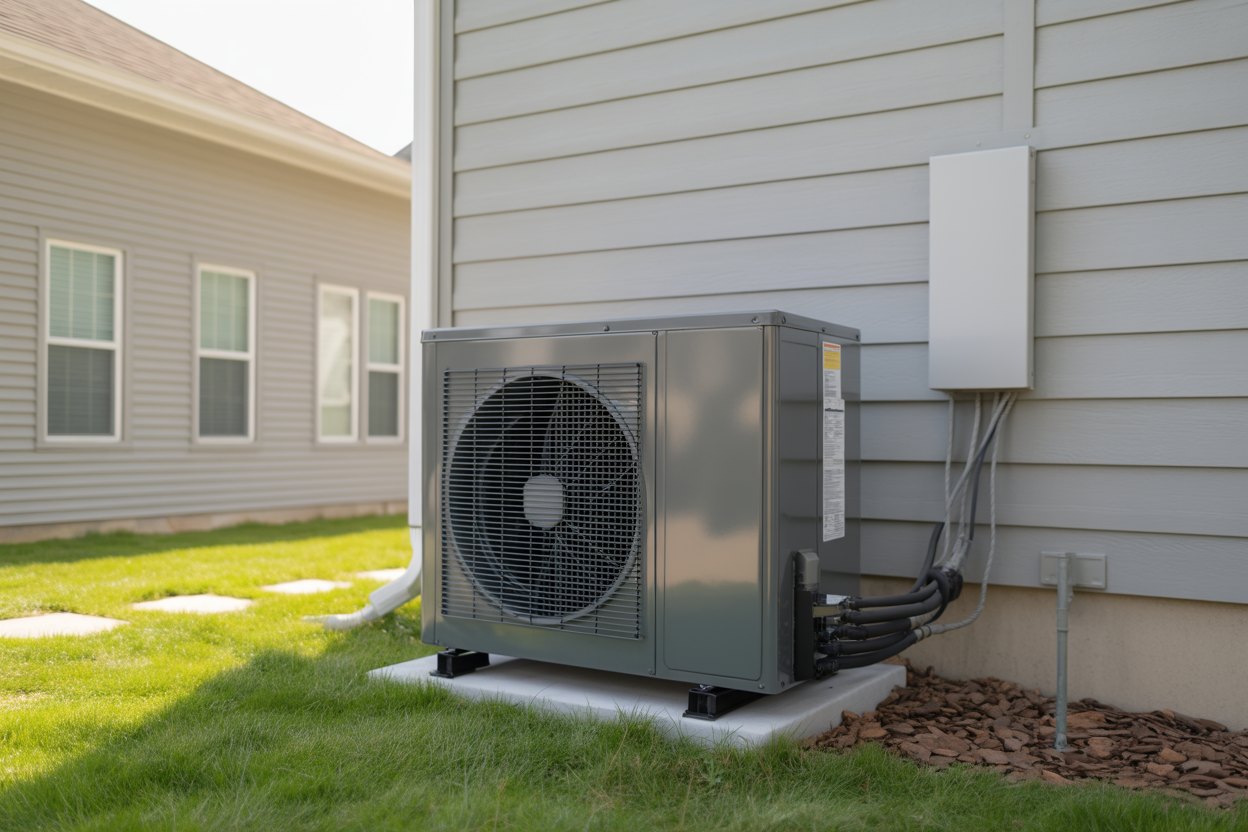
HVAC replacement cost in Washington: low, typical, high
| Low | Typical | High | |
|---|---|---|---|
| Total project | $4,127 | $12,489 | $17,593 |
| — Labor (≈60%) | $2,476 | $7,493 | $10,556 |
| — Equipment (≈40%) | $1,651 | $4,996 | $7,037 |
Figures assume an average single-family home with usable existing ductwork and a standard-efficiency system. Ductwork changes, high-efficiency equipment and difficult attic access land above these ranges.
Cost by system type in Washington
| System | Installed total | Typical lifespan |
|---|---|---|
| Central AC only | $4,235 – $8,688 | 12–17 yrs |
| Gas furnace only | $3,041 – $10,860 | 15–20 yrs |
| Furnace + AC (full system) | $5,430 – $17,593 | 15–20 yrs |
| Air-source heat pump | $8,688 – $16,290 | 12–15 yrs |
| Ductless mini-split (per zone) | $4,344 – $8,688 | 15–20 yrs |
Cost by home size
| Home size | Approx. cooling capacity | Full system, installed |
|---|---|---|
| Small home (~1,200 sq ft) | 2 tons | $3,692 – $11,729 |
| Average home (~1,800 sq ft) | 3.5 tons | $6,462 – $20,525 |
| Large home (~2,600 sq ft) | 4.5 tons | $8,308 – $26,390 |
Capacity shown is an estimate from floor area only. Correct sizing requires a Manual J load calculation — insist on one before signing any quote.
Why Washington prices run above the national average
Washington carries a local cost index of about 1.09 — HVAC labor, permits and equipment here price roughly 9% above the US average, driven mostly by labor rates.
Season matters even more than metro: the first heat wave and the first hard freeze create backlogs across District of Columbia, and emergency pricing follows. Replacing in the shoulder seasons — spring or fall — regularly saves 10–20% on the same equipment.
HVAC in Washington: systems, climate and permits
Best system types for Washington, D.C.
Heat pumps (modern cold‑climate air‑source types) are increasingly practical in D.C.’s climate because winters are moderate and summers demand strong cooling and dehumidification. They replace separate furnace+AC in many homes, reducing install complexity when ductwork is reusable. Ductless mini‑splits suit rowhouses or additions where duct runs are impractical; multi‑zone heads handle varied room loads. If keeping gas heat, pairing a high‑efficiency furnace with a variable‑speed SEER2‑rated AC is common. Aim for higher SEER2 tiers (14–21+ depending on budget and rebate eligibility) for lower operating cost and humidity control.
Energy, utility and rebate considerations
DC residents should check local utility rebate programs (often for heat pumps and high‑efficiency AC) and the federal Section 25C tax credit for qualifying equipment and labor. Seasonal peak‑demand pricing and time‑of‑use signals from regional utilities can make efficient heat pumps and variable‑speed systems more valuable. Also consider humidity control upgrades: enhanced dehumidification can be important in D.C. and may be eligible for rebates. Salt air exposure is limited in D.C. proper, but urban dust and pollen suggest good filtration and accessible outdoor coils for longevity.
Permits, Manual J and local code/HOA notes
Washington requires permits for most HVAC replacements; a licensed contractor typically pulls permits and files equipment specs. A Manual J load calculation is standard practice and often required to size systems correctly—don’t accept systems sized by a rule‑of‑thumb. Historic‑district rowhouses or HOAs may restrict exterior condenser placement or visible equipment; verify setback and screening rules before bidding. Always confirm permit, setback and emissions requirements with D.C. permitting offices and any applicable HOA before scheduling work.
How to hire an HVAC contractor in Washington (and what to avoid)
- Get 3 written bids. Line-item quotes make comparison honest — equipment model numbers, labor, permit, removal and any ductwork.
- Verify license & insurance. Ask for the District of Columbia contractor registration/license number and a current certificate of insurance — then check them with the issuing authority.
- Check the paper trail. Manufacturer certifications (Carrier, Trane, Lennox dealer programs, NATE-certified technicians) and a local physical address beat a magnetic truck sign.
- Never pay in full upfront. A deposit of 10–30% is normal; final payment on completed, inspected work.
- Get the warranty in writing. Separate manufacturer (materials) and workmanship coverage — and who honors it if the company changes hands.
🚩 Red flags
- A replacement quote with no load calculation — sizing "by square footage" or "same as the old one" is how homes end up with oversized systems that short-cycle.
- A maintenance visit that turns into an urgent replacement recommendation, with no measurements shown and a discount that expires today.
- Refrigerant top-ups sold repeatedly without ever finding the leak.
- Quotes far below every other bid — the gap usually reappears as change orders or unpermitted work.
HVAC repair costs in Washington
Not every problem needs a new system. Typical repair pricing in Washington:
- Common electrical parts (capacitor, contactor, relay): $163 – $489
- Refrigerant leak diagnosis and repair: $543 – $1,629
- Thermostat Installation Cost: $74 – $543
- HVAC Tune-Up Cost: $76 – $217
Rule of thumb: when repairs approach 25–30% of replacement cost on aging equipment, replacement is usually the better long-term spend. See the full repair cost guide.
How we calculate Washington costs
We start from documented national baselines, size the job to a typical home for this metro, then apply Washington's local cost index (≈1.09). Full details on our methodology page. These are planning ranges, not quotes — a real bid for your specific system beats any model. Want that real number? Get free local quotes.
Frequently asked questions
What's the best season to replace an HVAC system in Washington, D.C.?
Late spring and early fall are best: contractors have more availability between peak cooling and heating seasons, and temperate weather eases equipment delivery and startup. Replacing off‑peak often yields faster scheduling and sometimes lower labor premiums than mid‑summer or mid‑winter.
Are HVAC replacements in D.C. more expensive than the U.S. average?
Yes, generally higher. D.C.’s local cost index (about 1.09) reflects higher labor and dense urban job complexity. Full system replacement ranges you provided ($4,127–$17,593, typical $12,489) still apply locally but bids trend toward the upper part of that range due to wage and access factors.
Should I choose a heat pump or a gas furnace plus AC in Washington?
Heat pumps are a strong choice in D.C. because winters are moderate and heat pumps now provide reliable heating and superior cooling/dehumidification. If your home already has high‑quality gas infrastructure and you prefer a dual‑fuel approach, a furnace+AC remains valid. Evaluate run costs, incentives, and ductwork condition.
How many contractor quotes should I get in D.C.?
Get at least three written quotes from licensed HVAC contractors. D.C. has many providers; multiple bids help compare equipment, sizing (Manual J), labor allowances for tight urban installs, and permit handling. Verify references and that each quote includes permit and disposal fees.
When is repair a better option than replacement in Washington?
If a repair visit (local range $163–$1,629) fixes a single component on a relatively young, efficient system, repair is sensible. Replace when multiple major components fail, the unit is near end‑of‑life, or efficiency is low enough that typical utility and rebate incentives justify full replacement. Consider D.C. rebates and load needs when deciding.
How Washington compares to nearby metros
| Metro | Typical replacement | vs Washington |
|---|---|---|
| Tacoma, WA | $12,650 | +1% |
| Vancouver, WA | $12,420 | -1% |
| Reno, NV | $12,420 | -1% |
| Fort Collins, CO | $12,190 | -2% |
Ready for a real number for your Washington system?
Compare up to 3 free quotes from local HVAC contractors — no obligation, no spam.
Get my free quotes